Biweekly vs. Semimonthly Pay: Why Your Paycheck Looks Different
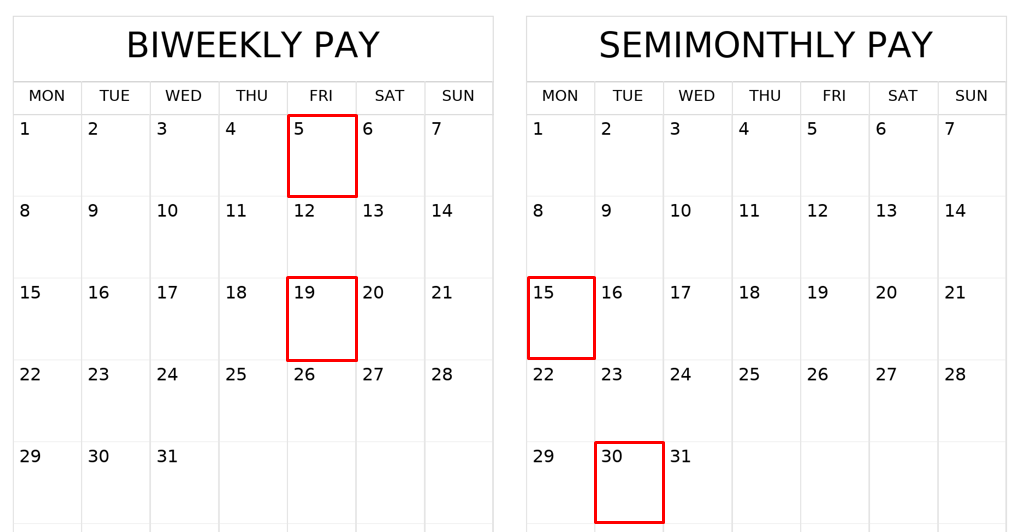
It’s not your imagination — the math really does change. Biweekly and semimonthly pay schedules aren’t the same, and the difference can change how much hits your account each payday.
Table of Contents
Quick Answer
If you’re paid biweekly (every two weeks), you get 26 paychecks a year.
If you’re paid semimonthly (twice a month), you get 24 paychecks a year.
That means your per-check amount will be smaller with biweekly pay, even if your annual salary stays exactly the same.
Why It Matters
The difference isn’t about your total salary — it’s about timing and budgeting.
Biweekly = 26 checks/year
→ Paid every two weeks (usually Fridays)
→ Two “extra” paychecks in months with three pay periods
→ Great for hourly workers or those budgeting by week
Semimonthly = 24 checks/year
→ Paid on set dates (like the 15th and 30th)
→ Easier for salary consistency and monthly bills
→ Great for salaried employees
Example:
Let’s say you earn $52,000/year.
| Pay Frequency | Paychecks/Year | Gross per Paycheck |
|---|---|---|
| Biweekly | 26 | $2,000 |
| Semimonthly | 24 | $2,166.67 |
Same salary — but a different feel on payday.
Pros and Cons
Biweekly
✅ More frequent pay
✅ Easier weekly budgeting
❌ Pay dates shift each month
❌ Payroll may hit weekends/holidays
Semimonthly
✅ Predictable dates
✅ Aligns with monthly bills
❌ Slightly larger withholdings per check
❌ Fewer paydays
Take Control of Your Paychecks
Understanding biweekly vs. semimonthly pay is just the first step — now it’s time to see the real numbers. Whether you’re comparing job offers, budgeting smarter, or double-checking your pay, FormPros makes it easy.
With FormPros’ paystub generator, you can:
- Instantly see your take-home pay after taxes and deductions
- Compare biweekly and semimonthly paychecks side by side
- Generate professional paystubs in seconds for records, loans, or proof of income
FAQs
-
Why is my biweekly paycheck smaller than my semimonthly one?
Because you’re dividing the same annual salary into 26 checks instead of 24.
-
Which schedule is better for budgeting?
Biweekly works well for weekly or biweekly expenses. Semimonthly fits better if you pay monthly bills like rent or loans.
-
Do taxes change between the two?
The total tax for the year doesn’t change — only how it’s divided per paycheck.
-
What happens if a payday lands on a weekend or holiday?
You’ll usually get paid the business day before.
-
Can I switch from semimonthly to biweekly pay?
It depends on your employer’s payroll system — ask HR or payroll directly.
