How to Create a Pay Stub and Calculate Wages
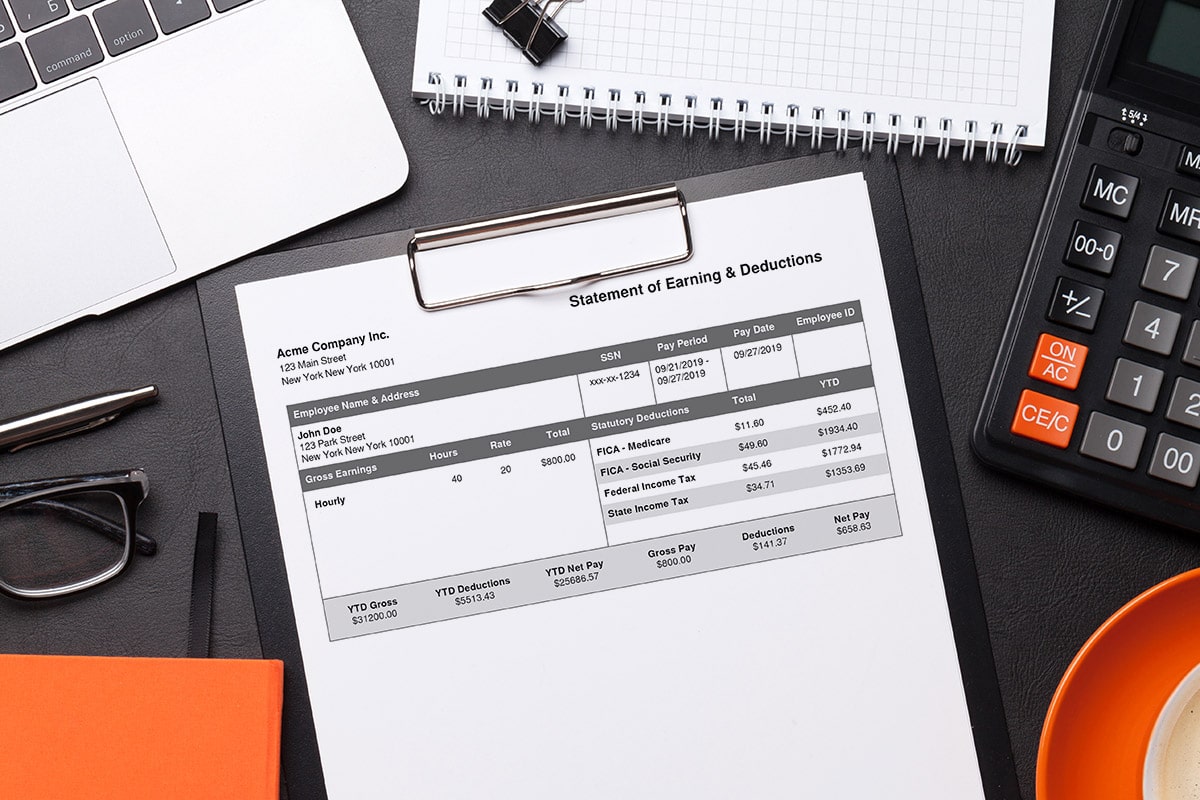
Creating a pay stub is an essential part of managing payroll, but the real challenge lies in knowing how to calculate wages accurately. Whether you’re an employer preparing paychecks or a contractor verifying income, understanding the math behind gross pay, deductions, and net income is critical. A pay stub is more than just a summary—it breaks down exactly how you calculate earnings and apply withholdings.
In this guide, we’ll cover the basics of what a pay stub includes, then walk through how to calculate wages step by step. We’ll show you how to calculate gross wages, handle overtime correctly, identify the taxes and deductions that impact take-home pay, and use tools to automate the process accurately.
Table of Contents
Paystub Basics
A paystub is a document that shows how an employee’s wages are calculated for a specific pay period. It typically includes key details like employee information, hours worked, gross earnings, taxes withheld, deductions, and net pay (the amount the employee actually takes home).
Paystubs can be issued digitally or in print, depending on the employer’s system. Both formats serve the same purpose—keeping a clear record of how wages are earned and adjusted.
Need a deeper breakdown? This is an in-depth explanation of everything that goes into a paystub.
How to Calculate Wages (The Core of It)
Knowing how to calculate wages accurately is the most important part of making a paystub. Let’s break down each component of the wage calculation process.
1) Gross Wages: The Starting Point
Gross wages are the total earnings before any deductions or taxes.
Hourly employees: Multiply the number of hours worked by the hourly rate.
Example: 40 hours × $20/hour = $800
Salaried employees: Divide the annual salary by the number of pay periods in a year.
Example: $52,000 ÷ 26 biweekly pay periods = $2,000
Overtime pay: Typically calculated at 1.5× the regular hourly rate for hours worked over 40 per week. (See the dedicated section below for how to do this correctly, including when bonuses are involved.)
Example: 5 OT hours × ($20 × 1.5) = $150
2) Common Add-Ons to Gross Pay
Additional earnings can boost gross wages and must be included in the paystub.
- Commissions based on performance or sales.
- Bonuses for meeting goals or milestones.
- Tips, where applicable.
- Reimbursements for work-related expenses (if paid through payroll).
3) Deductions: Pre-Tax vs Post-Tax
Deductions reduce taxable income and/or net pay.
- Pre-tax deductions: Lower the taxable income before taxes are calculated. Examples include health insurance premiums, 401(k) contributions, and HSA payments.
- Post-tax deductions: Come out after taxes are applied. These might include union dues, wage garnishments, or charitable contributions.
4) Paystub Deduction Codes: Making Sense of Abbreviations
When reviewing a paystub, you may notice short codes or abbreviations next to deductions. These are deduction codes, and they serve as quick labels to identify the type of withholding applied. Understanding them helps employees (and employers) verify that the correct amounts are being withheld. Some common paystub deduction codes include:
- FED – Federal income tax
- FICA-MED – Medicare tax
- FICA-SS – Social Security tax
- 401K – Retirement contributions
- INS – Health, dental, or vision insurance premiums
- HSA/FSA – Health Savings Account or Flexible Spending Account contributions
- GARN – Court-ordered wage garnishments
5) Taxes Withheld
Employers are required to withhold several types of taxes from employee wages.
- Federal income tax: Based on the employee’s W-4 information
- FICA taxes: Social Security and Medicare
- State and local taxes: Vary depending on location
6) Net Pay: The Bottom Line
Once you subtract all deductions and taxes from gross pay, you’re left with net pay—what the employee actually takes home.
Formula:
Gross Pay – Deductions – Taxes = Net Pay
How to Calculate Overtime Pay
Overtime is where wage calculations most often go wrong, so it’s worth breaking out on its own, especially for hourly staff.
The Basic Rule (Time and a Half)
Under the federal Fair Labor Standards Act (FLSA), non-exempt employees must be paid at least 1.5× their regular rate of pay for every hour worked beyond 40 in a single workweek. This “time and a half” is the federal floor; some states require more.
Overtime pay = Overtime hours × (Regular rate × 1.5)
Example: An employee earning $20/hour who works 45 hours in a week:
- Regular pay: 40 × $20 = $800
- Overtime pay: 5 × ($20 × 1.5) = 5 × $30 = $150
- Gross pay: $800 + $150 = $950
Watch the “Regular Rate” — It Isn’t Always Just the Hourly Wage
Here’s the part employers most often get wrong: overtime is based on the regular rate, which can be higher than the base hourly wage. The regular rate generally must include nondiscretionary bonuses, commissions, and shift differentials earned that week (not just the hourly wage).
Example: An employee earns $20/hour, works 45 hours, and earns a $100 production bonus that week.
- Straight-time pay for all hours plus the bonus: (45 × $20) + $100 = $1,000
- Regular rate: $1,000 ÷ 45 hours = $22.22
- Overtime premium owed: 5 OT hours × ($22.22 × 0.5) = $55.56 (the extra “half” on top of the straight time already counted)
- Total weekly gross: $1,000 + $55.56 = $1,055.56
Notice that ignoring the bonus would have understated the overtime owed; a common and costly error.
Daily Overtime and State Rules
Federal law only triggers overtime after 40 hours in a week. Some states add their own rules: California, for example, requires overtime after 8 hours in a day and double time after 12 hours in a day. Always check your state’s requirements, since they can be stricter than federal law.
Who Qualifies for Overtime?
Only non-exempt employees (generally hourly staff) are entitled to overtime. Exempt employees (typically salaried workers who meet specific duties and salary-threshold tests) are not. Note that paying a salary doesn’t automatically make someone exempt; misclassifying a non-exempt employee to avoid overtime is a frequent wage-and-hour violation.
Common Overtime Mistakes
- Leaving nondiscretionary bonuses or commissions out of the regular rate.
- Missing daily-overtime rules in states that require them.
- Averaging hours across two weeks to avoid overtime — each workweek stands on its own.
- Misclassifying non-exempt employees as exempt.
Example Wage Calculations

Let’s bring it all together with two examples—one for an hourly employee and one for a salaried employee. These will show how gross pay, deductions, and taxes all lead to the final net pay.
– Example 1: Hourly Employee –
- Name: Alex
- Hourly rate: $18
- Hours worked: 42
- Overtime: 2 hours × ($18 × 1.5) = $54
- Gross pay: (40 × $18) + $54 = $774
Deductions and Taxes
- Pre-tax health insurance: $50
- Federal income tax: $70
- Social Security & Medicare (FICA): $59.23
- State tax: $25
Net pay calculation:
$774 – $50 – $70 – $59.23 – $25 = $569.77
– Example 2: Salaried Employee –
- Name: Taylor
- Annual salary: $60,000
- Pay schedule: Biweekly (26 pay periods)
- Gross pay: $60,000 ÷ 26 = $2,307.69
Deductions and Taxes
- 401(k) contribution (pre-tax): $150
- Federal income tax: $230
- FICA: $176.54
- State tax: $90
Net pay calculation:
$2,307.69 – $150 – $230 – $176.54 – $90 = $1,661.15
Take Charge of the Process
While it’s important to understand how to manually calculate wages, most businesses and freelancers use digital tools like FormPros to streamline the process. The FormPros paystub generator takes care of the heavy lifting—automatically calculating gross pay, deductions, and taxes while formatting everything professionally for your records.
Still, accuracy is key. Even when using a tool, make sure to double-check:
- That hours worked, pay rates, and pay periods are correct
- Employee or contractor details are accurate
- Deductions and tax settings reflect your current local and federal requirements
Using a tool like FormPros doesn’t replace due diligence—it enhances it, helping you save time while keeping your payroll accurate and compliant.
FormPros Has You Covered
Simplify your paperwork with FormPros! From creating paystubs, W-2s, and 1099-NEC forms to generating LLC Operating Agreements and even voided checks, our easy-to-use platform has you covered. Save time, reduce errors, and handle your business documents with confidence!
FAQs
-
How do I calculate overtime pay?
Multiply each overtime hour (over 40 in a workweek) by 1.5× the employee's regular rate. If the employee earned a nondiscretionary bonus or commission that week, include it in the regular rate first; overtime is based on that higher rate, not just the base hourly wage.
-
Do salaried employees get overtime?
Sometimes. Overtime depends on whether an employee is exempt or non-exempt, not on whether they're paid a salary. A salaried employee who doesn't meet the FLSA's duties and salary-threshold tests is non-exempt and is owed overtime.
-
Is overtime calculated daily or weekly?
Under federal law, overtime is based on hours over 40 in a workweek. Some states also require daily overtime (California, for instance, requires it after 8 hours in a day) so always confirm your state's rules.
-
What's the difference between a paystub and a paycheck?
A paycheck represents the actual payment an employee receives—either as a physical check or through direct deposit. A pay stub, on the other hand, shows how the employer calculated that payment, including wages, deductions, and taxes. The stub explains the "why" behind the paycheck amount.
-
How long should employers keep paystub records?
Employers should keep paystub records for at least three years, though some states or industries may require a longer period. Detailed records support audits, resolve disputes, and ensure compliance with labor laws. Many employers use digital storage, as long as they keep records accessible and secure.
-
Do freelancers or 1099 workers get paystubs?
Typically, clients don't issue paystubs to freelancers, but freelancers can create their own to track income. Tools like FormPros let 1099 workers generate paystubs for proof of income, loan applications, or recordkeeping—even without formal documentation from an employer.
-
What happens if a mistake is found on a pay stub?
If you spot an error on a paystub (like a miscalculated deduction or incorrect hours) report it immediately to payroll or HR. Employers typically must correct the issue promptly and may provide an amended paystub or back pay when necessary.
